Posts

Article Response - "Who Cares How You Listen?"

How People Actually Listen - Stop Pandering to an Extinct World a short response to Who Cares How you Listen? - Thoughts on Our Relationship with Recordings read the post to which this piece is a response here As musicians or people interested in classical music, we must simply face the truth. The last time the concert hall has been the "primary mode of consumption" in classical music has been literal decades. Even as early as 2002, a consumer study published by Audience Insight LLC lists radio as the number one source for listening to classical music, followed by recordings, and then lastly live concerts (view here ). It is naïve, seemingly purposefully so, of musicians to deny this fact again and again. The only musicians who have a "complex relationship with recorded music," are those who blame the lack of their career success on it no longer being the 'good ole days'. The authors of Who Cares How You Listen? - Thoughts on Our Relationship with Recordings...
Robert Carl - Sentient Serenade

Robert Carl - Sentient Serenade The sparse serenade sounds more intellectual than natural, a literal distillation of the organic world through a mathematical lens.  Robert Carl 's Sentient Serenade  is a fresh take on how natural sounds inspire new creations of art. Carl conceived of the piece after viewing a spectrogram of natural sounds. Using an indirect source for musical material is an interesting concept, which can be heard throughout the work. The sparse serenade sounds more intellectual than natural, a literal distillation of the organic world through a mathematical lens. Carl has a strong sense of traditional rhetoric in his music, which creates a notable sense of form and focus when repeating short motives. Performed and recorded by the Four Corners Ensemble  (4CE), Sentient Serenade  demands a high level of focus for the players. While sounding technically easy, the piece is exposed in orchestration, and relies primarily on the perfect execution of timbral...

John Mackey - Divine Mischief: Concerto for Clarinet

 John Mackey - Divine Mischief: Concerto for Clarinet Divine Mischief  is erratic, borderline random, at times corny, but most of all, firmly entertaining. John Mackey 's latest work, a three-movement concerto for clarinet and wind ensemble, challenges the expected norms of the genre. Divine Mischief is erratic, borderline random, at times corny, but most of all, firmly entertaining. Mackey's sudden and drastic shifts of style, meter, and timbre are brought to life and even exaggerated by the virtuosic theatrics of clarinetist Julian Bliss . The concerto was premiered by Bliss and the Dallas Winds on the 18th, and had its second performance by Baylor University on the 20th. Throughout all three movements, Mackey throws the audience for a loop by having the solo clarinetist musically portray the titular mischief. Every time the music begins the settle into a groove or mood, Bliss plays a completely contradictory note. Even the first entrance of the clarinet, guns blazing with...

PinkNoise Ensemble: 'eins' Concert

 PinkNoise Ensemble: eins  Livestreamed Concert PinkNoise Ensemble effectively combines the usually distant contemporary music concert with theatrics and programming to stimulate the audience. The recent concert on September 19th is a great example of engaging programming, with the concert climaxing in the world premiere of Simon Kanzler 's eins , a wild and twisting piece for Pierrot ensemble. The work is preceded by a selection of short chamber works by composers Francesco Filidei, Carolyn Chen, Ann Cleare, and Natacha Diels. The concert ends with a simple, yet moving, work by Charles Uzor, George Floyd in Memoriam . Uzor has all members stand in darkness and silence for 8 minutes and 46 seconds. While a fitting and emotional tribute, it could be argued that the piece takes advantage of the political nature of the event for the composer's personal gain. PinkNoise  showcases the future of chamber music by combining virtuosic players, various forms of improvisation, and i...

Wynton Marsalis - Tuba Concerto

Wynton Marsalis -  Tuba Concerto Marsalis ' Tuba Concerto , premiered by Carol Jantsch  and the Philadelphia Orchestra  last December, can now be heard on the Sunday Afternoon Classical Archive (listen here ). The work passes through various jazz genres in the form of four movements, each with different stylistic idioms required of the soloist and orchestra. Jantsch has absolutely no problem keeping up with Marsalis' compositional style, however, the strings clearly struggled to emulate the bebop lines present in the final movement. Jantsch also got a chance to showcase her skill at performing multiphonics in the first movement, a technique which she says is relatively new to her. Overall, the work is exactly what is to be expected from esteemed jazz composer and performer Marsalis: an incredibly delightful, audience-pleasing work which puts the soloist, Jantsch, through an intense technical gambit.

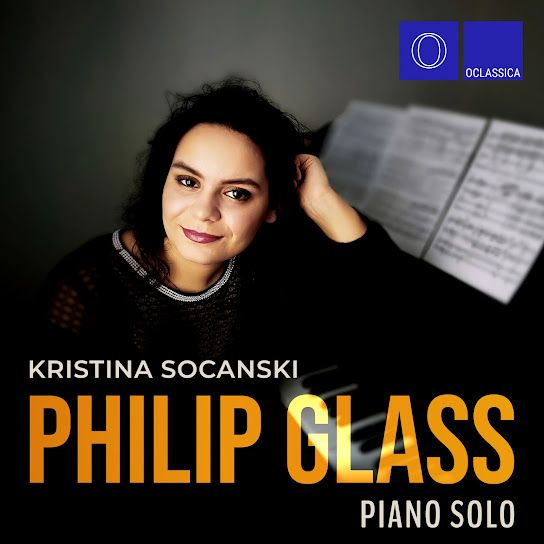
Kristina Socanski - "Philip Glass: Piano Solo"

Image
 Kristina Socanski -  "Philip Glass: Piano Solo" album review Too often Glass' brand of minimalism is deemed robotic and unemotional; to combat such, Socanski redefines what the music offers the performer and listener. In her recent interpretation,  Kristina Socanski  creates a sense of beauty not often heard when listening to performances of Philip Glass' music. Socanski's second album release, consisting of a curated selection of Glass' solo piano pieces from across two decades, equally touches seasoned and amateur listeners with minimalist waves tinged with hints of pianistic romanticism. Too often Glass' brand of minimalism is deemed robotic and unemotional; to combat such, Socanski redefines what the music offers the performer and listener. She masks the mathematical repetitive structures behind the curtain, finally letting one experience the universal affect of this distinct musical world. Find the album here on the Oclassica label. equally touches ...

Derek Bermel - "Intonations" album review

Image
 Derek Bermel - Intonations album review His music expands classical music's intonation system in an audience friendly manner. Intonations is Derek Bermel 's second album released on Naxos ' "American Classics" series. The album explores Bermel's roles as both composer and clarinetist, accompanied by the JACK Quartet  and electric guitarist Wiek Hijmans . The titular track, Intonations , takes advantage of JACK's extreme technical command as an ensemble to explore subtle, yet intense divulsions into microtonality. In the first movement, "I. Harmonica", Bermel alternates between justly tuned and slightly detuned chords, literally mimicking the sound of a blues harmonicist overblowing and bending pitches. Bermel's implementation of pleasing microtonality continues through the next two movements, in the forms of a hymn and hustle dance. Intonations cyclically concludes by reviving the original harmonica motive from the opening of the entire pie...